Sunday, January 13, 2013

Finding plots in cemeteries - interview with top crime writer Steve Robinson

Having now read two of his bestselling books, I'm very pleased to welcome the Genealogical Detective, Steve Robinson, to my blog. Whether he thinks he's a genealogical detective or not, is one of the questions I put to him...

Steve Robinson's website

About Steve Robinson


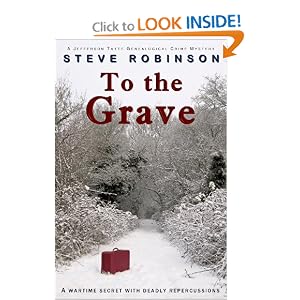
Steve Robinson was born in coastal Kent, UK, and now lives near London on the Essex/Hertfordshire border. His passion for writing began at the age of sixteen when he was first published in a computer adventure magazine and he has been writing by way of a creative hobby ever since.  When a career in telecommunications ended in redundancy he began to write full time.  His debut novel In the Blood was the result, with To the Grave following a year later.

Steve says  

I write for the crime, mystery and thriller genres with a family history angle, having become interested in genealogy as a means to tell the story of 'In the Blood' and perhaps because at the time I had no idea who my maternal grandfather was, which is something that has always intrigued me.  He was an American GI billeted in England during the Second World War.  A few years after the war ended, he went back to America, leaving a young family behind, and to my knowledge no further contact was made.  I traced him to Los Angeles through his enlistment record and discovered that he was born in Arkansas, but until recently that was all I knew.  Perhaps this is why my lead character is an American genealogist.  In August 2012, following correspondence with an amateur genealogist in Maine, New England, who wrote to me about my books, I learnt more about my maternal grandfather and my wider American family.  I hope to share that story on my websitesomeday.

Steve's latest book - a Jefferson Tate genealogical mystery

amazon kindle link

The story


HISTORY: from the Greek - historia. Knowledge acquired by 'investigation'.

It should have been a quiet weekend in London - a long overdue visit with the only true friend American genealogist Jefferson Tayte ever had. Now his friend lies bleeding in his arms and Tayte must follow his research to understand why, making him the target of a ruthless, politically motivated killer.

Working with historian Professor Jean Summer and New Scotland Yard on what becomes a matter of British national security, Tayte soon finds himself in a race to solve a three-hundred-year-old genealogical puzzle. It takes them all on a deadly, high stakes chase across London as Tayte tries to connect the pieces and work out the motive behind a series of killings that spans twenty years.

In what is Tayte's most personal assignment to date, 'The Last Queen of England' combines historic fact with fiction, challenging British history as we understand it. It uncovers a conspiracy that if proved could ultimately threaten an institution that has lasted more than a thousand years: the British monarchy.

Nullius in Verba: take no one's word for it.

Interview with Steve Robinson


Welcome, Steve! I first heard of your books because my husband had bought and read them all so then I had to read them too. I didn't realise at that stage that I'd be lucky enough to interrogate you on my blog. As far as I know, you invented the genre of genealogical whodunit, which is pretty impressive these days, when everything seems to have been done before. Why do you think so many people are interested in climbing their family tree?

I think it’s part of the human condition to be curious about who we are and where we came from.  Genealogy helps us to answer that question and with so many records now being digitised and being made available online, our ancestry has never been more accessible.  The exploration of our own family connections can also breath life into the past as our ancestor’s stories are uncovered, and then there’s the allure of all those skeletons in the family closet waiting to be found.  I think it’s easy to see the attraction.

Your main character, the likeably paunchy and flawed Jefferson Tate, fondly known as JT, is an American genealogical detective and the details of his work are very precise. Are you a genealogical detective yourself?

Not professionally, although I’ve become something of an amateur genealogist over the years since I started writing my genealogical crime mystery series.  I have to become one to some extent when I’m writing or my books would lack credibility.  I essentially give myself a problem to solve - or rather, a brick wall for JT to climb.  At the time I usually have no idea how he’s going to climb it, so I have to work it out as any genealogist might.  I feel JT’s frustration, too.  There’s a scene in 'To the Grave' when JT is in his hotel room, trying to find someone, and he literally has no clue as to how he’s going to do that.  The records he needs to see either don’t exist or are closed to him.  So he stays up all night and grinds it out - and I remember with great clarity doing that with him.  It wasn’t easy and it took me much longer than it took JT in the book, but we found a way and I think that also helps to keep it real.

How do you research your books?

Once I have a high-level plot worked out, I carry out similarly high-level research, just to make sure everything works and is feasible.  If I’m writing in a particular time period I also research that early on.  Once I’m ready to start writing, I research each chapter as I come to it in greater detail.  I never feel that I can do enough research, but writing with authority in any given subject is as much about what you leave out as what you put in or your writing can become too instructional and seem to lack real confidence that only comes from understanding what you’re writing about.  With historical scenes I feel I have to know enough about the time and place to feel a part of it.  Only then do I feel that I can write those passages in such a way that the reader will be there with the characters when they’re reading about them.

Before this interview, I read ‘In the Blood’, so I could read your books in order, but I really like the look of the second one, based on your own story. J T says, 'If you can’t find this family, how the hell do you expect to be good enough to find your own?' Is that personal search part of your own motivation in writing?

I don’t think it’s why I write, but it’s certainly a part of why I write about a genealogist who has no idea about his own ancestry.  And it’s definitely why I wrote 'To the Grave', perhaps as a way to fill in some of my own unanswered questions with some facts and plenty of fiction.  I’m honestly not sure why I feel the need to write, but the need has always been there, as I suspect it must be with every writer.  I suppose it’s because of those voices in my head that I have no control over - the dialogue snippets that keep coming to life in my mind that I feel compelled to write down,  but I’ve no idea where they come from.

As a British writer, how difficult was it to create an American character and setting?

I wouldn’t say it I found it difficult at all.  Whether it’s people or places, it’s all down to the research and the differences are really very small.  There are language differences to understand and it’s important to get it right.  When JT’s speaking or I show his direct thoughts I endeavour to ensure that what he’s saying sounds authentic without overdoing it, but other than that, he’s just a man with a penchant for tan suits and Hershey’s miniatures.  I also visit the USA and Canada once every year or two, which helps, and if you’ll excuse the pun, being a quarter American on my mother’s side means that it’s in my blood.

Nice pun :) I felt you really knew the Cornwall location in ‘In the Blood’. How important is setting to you?

I’m a frequent visitor to Cornwall and love it for it’s rugged beauty and the escapism it offers.  It felt easy to write about the area because I’ve come to know it so well and because it’s such an evocative place to write about.  One reader paid me a great compliment in a review for 'In the Blood', saying that the scenery came to feel like another character in the book.  Cornwall gets to you like that.

Your route to self-publishing success included 5 years of rejection by traditional publishers. What are your views on self-publishing versus old-fashioned publishing?

I’m for any kind of publishing that helps a writer to be read, and since the advent of the eBook, the opportunities have never been better.  I resisted publishing my work independently for a long time, hoping that the next book and then the next would be the one, but after getting an agent with 'In the Blood', and after getting so many promising rejections from the big publishers, I decided that my work deserved a chance.  Above all, I believed that readers would enjoy it and I’m just so happy that that’s proving to be the case.

It's good to see you having that success and an inspiration to the rest of us treading the independent road. Which services, if any, do you out-source? Jacket design? Print book creation? Formatting?

I suppose I’m about as independent as an independent author can be as I do all those things myself, although I’m fortunate enough to have made a few friends along the way who proof read my books and find the things I miss prior to publication, which is as invaluable as it is appreciated.

What tips would you give authors on making a success of self-publishing?

I’m sure there are many, but I’ll highlight a few things that stand out for me.  It’s not always possible to come up with something new, but looking for a new approach to something that’s already established is the next best thing.  And be realistic about pricing.  You don’t have much choice when it comes to paperbacks, but for eBooks you do.  It’s a very competitive market and if no one knows who you are, you can’t really expect them to pay a high price for your books.  Many eBooks are also free of course and plenty of big-name-author’s eBooks can be bought for under a pound/dollar.  When I started out, I sold my debut book as cheaply as I could in the hope of growing a readership, so once someone had found my book, I didn’t want price to be a barrier.  Also keep in mind that it’s a long-term business and it takes some patience to establish yourself.  And keep writing.  Every book in publication increases the chance that someone will find you.


There are three JT novels now. Do you have ideas and plans to continue with the series?

Yes, I’m planning at least three more books in the Jefferson Tayte Genealogical Crime Mystery series.  After that, who knows?  Maybe another series if the demand is there, and if JT survives of course.  I don’t like to know too much about what’s in store for my characters.  I should think I’ll be plotting like crazy until the summer, and it will be a while before book four is ready, but I’m hoping there will be less of a gap between that and the following books as I’ll have already completed much of the plotting and research for them by then.  The next books in the series will be also more closely linked.

Glad to hear there are more on the way - and I know my husband will be! How long do you take to write a book and what stages does it go through?

The three books I’ve published each took a year to write, but that’s not really all the time that’s gone into them.  They’ve been through extensive rewrites since I first wrote them, so that they would better fit into the series that began when I published 'In the Blood'.  Once I’ve worked out the theme and have the general gist of the story, I’ll do some research and other ideas often come from that.  Then I’ll think about the ending and start plotting in earnest, working towards that end.  This is when I start to weave all the sub-plots in.  I didn’t plot that much with my first book and I ended up with 165,000 words and a lot of headaches, backtracking the plot and then cutting content, so I plot more thoroughly now and try to write a tidy first draft of about 100,000 words or so.  I’ll go through four or five drafts before I’m ready to let anyone else see the book, then my wife reads it.  I’ll then do another draft, set a publication date and send it out to proof readers.  I do a final polishing draft about a week before publication and I publish the eBook first as it’s easy to make corrections to the digital edition.  A month or so later, I set the paperback edition rolling, then I get cracking on the next book, having had a natural break from writing while I’ve been publicising the new release.

It's interesting to hear the detail of your re-writing - so few people realise how much work goes into books as good as yours. What would you say is your most interesting writing quirk?

I’m sure it’s not particularly interesting, but perhaps it’s quite quirky that I wear an old olive-green bucket hat when I’m writing.  I started wearing it to keep the sun out of my eyes when writing in my kitchen, and then I found that it also helped to focus my attention on the words in front of me as it cuts out my peripheral vision.  In his book, On Writing, Stephen King suggests that you put your desk in a corner of the room, away from the windows.  I suppose my bucket hat has become my way to eliminate undesirable distractions wherever I’m working.

You should have an author photo with the hat! Like Terry Pratchett. What was one of the most surprising things you learned when creating your books?

That would have to be when I learned the whereabouts of my American GI grandfather.  I now know that he was buried in a military cemetery in Los Angeles in 1990.  I didn’t expect to discover that through my writing.  It came about following an email from another writer and amateur genealogist in Maine who initially wrote to me to say that she’d enjoyed reading 'In the Blood'.

Do you hear from your readers much? What do they say?

I get emails most days and feel both flattered and humbled to think that someone has taken the time to write to me.  I love receiving them and they’re typically written to express thanks for the enjoyment my books have given, which is wonderful.  Some readers also share a little of their own family history or talk about one or more of my books in greater detail.  I always reply and I’m surprised at how unexpected that can be.  It seems the least a writer can do in return for the kind words and support, and I hope to be able to continue writing back no matter how many emails I receive.

I noticed that you make your contact details readily available in your books and I've started doing the same, following your lead. 

I believe that you’re a keen photographer. What gear do you have? What do you enjoy about photography? 

I’m just getting back into SLR photography after a break of about twenty years, and as I create my own book covers I thought it was about time I got some decent equipment.  I’ve used Canon digital compacts for years so I stuck with Canon for the DSLR.  On one level I enjoy the creativity, and on another I like seeing the detail in the world around me that I can’t easily see with my own eyes - such as with macro photography and photos of wildlife.  I also enjoy the challenge of getting close to wildlife to get the shot.

What else do you like doing in your spare time?

You’d think a full time, independent author would have plenty of spare time to play with, but I don’t seem to find much lately - or don’t allow myself much between the writing and the marketing and keeping the house and garden tidy.  Not that I’m complaining about anything - I’m really enjoying it - but publishing is a business like any other and you have to put the hours in if you want it to be a success.  When I do switch off, I have a guitar that I started to learn - and now need to pick up more.  I like to play golf and there’s the photography of course, which I’m also hoping will encourage me to take more regular walks.  Spare time activities seem to vary, depending on what part of the writing process I’m at.  When I’m plotting for instance, I often find that I need to just walk away and do something else, particularly if I’m trying to solve a major plot issue - the answers to which invariable come when I’m not actively looking for them.

Thank you, Steve, and what are you doing chatting to me? Get back to writing the next JT novel! Your fans are waiting. My reviews of Steve's first two books will be in my next blog post.


Keep up to date with Steve Robinson's news and read his other interviews on his website


Next Blog my reviews of
amazon link
amazon link


Saturday, January 5, 2013

Let's argue about history


When you write a historical novel, you can expect to argue about history.

12th C Llansteffan Castle, Wales
I wasn't surprised when my network of critical friends found some mistakes in the period background of my 12th century novel and it was incredibly useful to have their input. Usually, they were right.

What did surprise me though was how passionate I felt about some aspects of my background research; black armour, chastity belts, riding side-saddle, handkerchiefs, pills, sweets and Damascene swordmaking are just some of the topics that raise my blood pressure.

Sometimes, I really did have evidence that bucked the received opinion. Sometimes I just felt plain stubborn about the practicalities of life. I haven't felt like this since a historian told me that prehistoric men did cave-drawings of prey animals either to plan or to celebrate a hunt. 'How do you know they were men?' I asked him. 'Why couldn't women have been drawing to entertain and teach the children?' And that's if you assume a patriarchal gender-stereotyped society. What if it wasn't?

In a nutshell, these are some of the problems with 'history'

- Evidence is limited and open to interpretation.

- Theories are based on assumptions - and collapse like a house of cards if the assumptions are changed.

- The history passed down to us was written by men, and is mostly about male leaders - HIS story.

- Different places and peoples communicate history differently.

11th century part of the Alhambra, Spain


So, in random order - and feel free to comment:-

chastity belts - were they around in 1150 and what were they used for? I found some online suggestions that  the Crusades of 1147 onwards, resulting in husbands' long absences, motivated the use of chastity belts. I like the idea that they were perhaps used by women to prevent rape rather than by husbands to lock up their wives' chastity but I don't see why both aren't possible.

handkerchiefs - apparently not around in 1150 but what I want to know is whether this just means that the word hadn't been coined or did everyone wipe their noses on their sleeves? Just because there's no evidence of something doesn't mean it wasn't there and I don't believe that inventive individuals didn't ... invent!... useful items ahead of their official appearance in language or records. If I'd lived in the 12th century, I'd have had a nose-wiping scarf! As well as a pretty no-snot one to give to my true knight.

the Black Knight - OK, no black armour in 1150 (although I bet the Japanese Samurai had some) but everyone who's watched 'Monty Python and the Holy Grail', or of course read the Mabinogion, knows that the black knight is the baddy. So what was black about him? No, I don't believe it was just his black heart showing.

riding side-saddle - didn't happen until much later, when the saddle for riding in this manner was invented. Pictures show women in medieval Europe riding astride. I agree, women rode astride! That doesn't mean they never rode side-saddle. Absence of proof doesn't mean it didn't happen. And have you tried sitting astride on a horse, while wearing a long, slightly flared gown? You have to hitch your skirt up to your knickers (which you wouldn't have been wearing in 1150) and, believe me, the pose is really not lady-like. So, unless you were wearing your incredibly wide circular riding-gown, I reckon you'd have gone for sitting side-saddle! I found one person who agrees with me - hooray!

pills, sweets and Damascene swordmaking - not known in northern Europe in 1150. Agreed. But it is difficult for someone British (me) to take in just how sophisticated al-Andalus (Muslim-occupied Spain) and the Holy Land were in 1150. The Arabs, other Middle Eastern peoples, and the Jews, wherever they lived, had highly developed science, medicine, surgery, engineering, geography. They could make pills and sweets.

Britain had no sugar. This luxury good only reached southern France in 1150, reportedly brought back from the crusades by Alienor(Eleanor) of Aquitaine.

The superb filigree swords of Damascus, combining strength and beauty, cannot be recreated today. Scientists think that one of the ingredients, probably coming from India, was exhausted so that it is no longer possible to recreate the chemistry.

woman with sword
Any Christians trading with other peoples, or crusading against them - especially those who settled in the Holy Land - came into contact with all this knowledge.They brought it back to the south of France in 1149, to barbaric Britain at the end of the 12th century. And the Church stamped out every example of 'heresy' it found, from papermaking to astronomy.

I would like to believe that individuals like my character, Dragonetz, learned from their neighbour Moors and Jews, and that little candles of knowledge were passed on, despite the Church, to blaze into the Christian community's collective mind two hundred years later. We did finally, get books for everyone. And now look what's happening to them.

Lady of the Lake


Thursday, January 3, 2013

The 3 most emotional scenes in fiction ever


Negative


I was asked to write a guest post for Sooz Says Stuff, a great blog by an Australian writer, and I got all emotional. Or rather I started thinking about how writers can get readers all emotional. I've given some tips in my post here on how to make readers FEEL and I also thought about which scenes in fiction make me feel emotional, and why they work.

Emotion


These are three of my top scenes in fiction for making me really FEEL - which scenes would you pick? How much of the choice is because the situation strikes a personal chord, and how much of it is because it's so well written?

1) Baloo and Bagheera vouching for Mowgli in ‘The Jungle Book’ by Rudyard Kipling. I suppose I’d like a bear and a black panther, outsiders like me, to stand up for me in public, in front of the whole wolf pack.

2) Bathsheba fighting to protect the hay in the storm, with Gabriel Oak, in ‘Far From the Madding Crowd’ by Thomas Hardy. I think there’s something very sexy about a couple working in a physical activity together, particularly when fighting the elements. To me, this is one of the most romantic scenes ever written because the reader knows that Gabriel loves Bathsheba, and the fact her useless husband is in a drunken stupor adds to the undercurrents.

3) The ending of 'Brighton Rock' by Graham Greene. This is the most terrible, heartbreaking, pessimistic scene I’ve ever read and yet it is all in the reader’s imagination. You know that what is about to happen will destroy all Rose’s naïve illusions about Pinkie.

Read the rest of my blog post here.

Positive

Wednesday, December 26, 2012

Blogs worth a writer's visit


I've met some very interesting people, all round the world, via books and blogs, so if you're in the mood to browse, here's a few for you...

My Life, one story at a time
Donna McBroom Theriot lives in Louisiana, likes Sweet Tea and says, 'All my life I have loved books; so it was a natural progression to merge that love of books with book reviewing. I also love to write, and dispersed between the many book reviews you will find on my blog, are my stories, my memories, my memoir. I invite you along for the journey, through laughter and tears, and the ups and downs that make up my life'.

Donna's Blog 'My life; one story at a time' delivers what it promises - a mix of interviews, reviews, features, giveaways and some of the author's work. The blog changes frequently, with input from top writers (and I don't mean me!)

I was asked to do a guest post 'something personal, about how you managed to combine writing with  working and being a mother.' That really got me thinking back to the old days.


How to be a not-perfect writing-working-mother

I am lucky. The children are grown up, I no longer have to go out to work, and I can write or take photos whenever I want. But it wasn’t always like this…

Twelve books ago, I was forty, with a nine year old son, an adopted eighteen year-old daughter, two dogs, seven cats and occasional kittens. They all lived with my husband and me. I also had three stepdaughters, a bit older than my adopted daughter, who came over from time to time. As if that wasn’t enough, my husband and I had demanding full-time jobs too.  

In fact, I’d just been appointed Headteacher (Principal) of a school for 11-16 year-olds, to see the school through its last two years to closure. Parents don’t like to send their children to a closing school. This meant that we had a high number of disadvantaged youngsters in our school and teachers didn’t stay long. It was a tough job.

So that was the year I decided I’d write a novel. 

Read the rest on Donna's blog (after the details of 'Song at Dawn')

The Queen's Quill Review


If you like  HISTORICAL NOVELS, check out The Queen's Quill Review. Andrea Connell's site is serious and professional. No distractions here but the reviews are wham-bam to the heart of some very interesting books. A great site to find your next historical read. She's a busy lady but each update is well worth waiting for.

Lindsay's Romantics


You have a heart of mush and love ROMANCE? Check out Lindsay's Romantics - pink, pink and more pink, with plenty of reviews. Again, this is someone who writes herself and reviews the genre she loves.


Monday, December 10, 2012

Top 12 music videos

Christmas music - Jean Gill

My Top 12 Music Videos


This is my selection.  What's yours? How's about sharing, as a Christmas present to everyone who reads this. The rules are that you have to choose a video because it's a special video, not just because it's your favourite song or your favourite singer, and not just because the star is so desirable - or wearing so little clothing - you can't take your eyes off him/her!

1. Bryan Adams - Please forgive me
He had me from the moment he scratched at the door to join in. I just love this dog! I love the way he potters about on set, part of the band. I love the way Adams caresses him so naturally while recording. Great camera-work.This has to be the best behind-the-scenes video ever. I like the song too; love songs sung by scruffy, macho rock stars always appeal :)

2. Sade - Soldier of Love 
High drama and stunning images, with Sade's physical elegance and smooth voice. She has a poise and a presence that grabs attention. I find her beautiful and this video really appeals to me as a photographer, the landscapes, the movement, the silhouettes - and the horse. Isn't that the horse of your dreams?

3. Patrick Swayze - She's like the wind 
The combination of Swayze's beauty, with the romantic lyrics and the clips from 'Dirty Dancing' turn me into adolescent mush every time. I love Swayze's looks and the way he moves. Somehow the video hooks into a mix of nostalgia and romance, and knowing that Swayze's talent lives now only on screen makes it even more of a tear-jerker.

4. Aerosmith/RUN DMC - Walk this way
Makes me smile every time. Turning the competition between differing musical styles into a comic on-stage battle between the two bands was genius as a concept. I love rock, love Aerosmith but most of all I love the combination of great performances with play-acting in this video.

5. Shania Twain - That don't impress me much

She's gorgeous. I would love to photograph her. Drama, elegance, surreal juxtaposition of that desert landscape with the furry outfit. I want a furry outfit like that. But then I'd look like a pretentious muskrat, not like a fantasy queen.

6. Francis Cabrel - Je t'aimais, je t'aime et je t'aimerai

The opening image of the blue layered hills captures our landscape perfectly. Cabrel, one of my favourite singers, comes from the south of France and there is something quintessentially southern French in this video, right down to the old-fashioned touring circus that disappears into the distance at the end. A classic love song - sing it to your partner.

 7. Robbie Williams & Nicole Kidman - Somethin' Stupid
So stylish. All the period details, right from the opening frame, are so beautifully created and match the song. Williams and Kidman play the parts to perfection.

8. You can call me Al - Paul Simon/Chevy Chase
Funny :) I don't even know why it's so funny. There's something about Chevy Chase, his expressions and the fact you know he's miming that is just funny.

9. Jean-Jacques Goldman - La-Bas 
Another of my favourite French singers. His performances with Welsh singer/guitarist Michael Jones and American Carole Fredericks are pure magic, especially Ne en 17 a Leidenstadt, in which each of them takes a verse, wondering what he would have done if a) Jewish Goldmann had been a German in Nazi Germany b)    British Jones had been born in Belfast c) Black Fredericks had been born white and rich in Johannesburg. Powerful lyrics.

But the video I've chosen is La-Bas, because the story of an immigrant seeking work is filmed so beautifully with Goldman truly convincing in a role that had personal relevance. The sad postscript to this one is that Sirima, the beautiful girl singing in the video, was murdered by a jealous partner because she became 'too successful' after her duet with Goldman. Sirima was born in Isleworth, Middlesex UK, just like my husband. Her murderer got 4 years.

10. Queen - The show must go on 
While we've got the hankies out, here's another tear-jerker, not because of what's in the video but because of the context. This is a compilation of clips from so many great Queen videos that I could have put them all in my list. Remember Freddy as a housewife? And who'd have thunk Roger Taylor would look so good in drag! But Freddy sang 'The show must go on' when he was dying of AIDS and every word in that song is so much what he's doing that I can't believe he had the courage - or the wonderful voice - to sing it. Understatement is not a word that comes to mind with anything concerning Freddy, and this video is a tribute to an amazing performer.

11. Shakira - Objection (Tango) 
Put the hankies away and shake your bootie. I love this video! I hadn't even heard of Shakira when I saw this video and I was mesmerised. I love the way she moves, the energy, the passion. I've always loved to watch dance, any kind of dance and this video just fires me up with the desire to jump around the living-room, and kick some ass. The switch to cartoons and superheroes creates a good story in this too. I haven't got a clue what the lyrics mean - who cares!

12. Bonnie Tyler - Total Eclipse of the Heart (Interpreted)
Bonnie Tyler comes from the Swansea Valley in Wales and when I was visiting schools there, as an English Adviser, one of the ten year olds I spoke to told me 'Bonnie Tyler's my auntie, you know.' Everyone is very proud of her success where she comes from, a rough part of Wales. She made good. I love singing along with 'Total Eclipse of the Heart' but definitely thought the video was over the top. When I saw this version, I understood why :)

Laugh? I couldn't stop laughing when I first saw this. I can't watch the original now without smiling at just how weird it is! The cat is there so the video doesn't infringe copyright - boo to copyright laws, on this one - so ignore the cat and watch the TV screen.


Your turn. Share a music video that you think is brilliant.

Friday, December 7, 2012

An Idiot's Guide to Camera Filters


Misty morning in the Camargue
No, this isn't a guide FOR idiots; it's a guide BY an idiot. A couple of people have been asking me for advice on filters, so here it is. And that's all it is. MY advice based on personal experience this year. If my experience can help someone else, especially BEFORE you decide to spend all that money on buying a filter set, I'm happy to share.

You just want to know what to put on your list for Santa?

1. A Lee filter mount for your camera. Why Lee? Because there's a reason it's so expensive - it's well-made. This matters to me because I'm the sort of photographer who once reversed the car over my full camera bag. I only smashed a couple of cheap screw-on filters - the Nikon camera and lenses took the hit and lived to shoot another day (another two years actually, so far). Now you know why I'm sticking with Nikon. Oh, and my husband does not know about this particular test of my gear - please don't tell him.

2.  A 0.9  (-3 stops) soft graduated N.D. filter.

3. A Circular Polariser.

You've been very very good this year?

4. A Big Stopper     -10 stops Neutral Density filter

Be warned! Santa could have to go on a waiting list for your Lees as they're more popular than a Doc McStuffins 'time for your check-up' doll.

And get this great guide to shooting landscapes here 

Want to know more about the choices you make? Read on!

If you have any questions or comments after reading this, please post and I'll reply.

You want to improve your landscape photos? 

This was my aim, when I went on a joint shoot with nine other photographers in June. One of them was a very talented young photographer, Chris Hepburn,  who specialises in landscapes. Take a look at his portfolio! I was very keen to learn from him, which meant getting up at 3am to get to our chosen location before dawn. A few of us all took shots of the same place, at the same time, and then looked at the shots Chris had taken. Even allowing for his technical and artistic expertise in his specialism, there was no doubt that using filters gave Chris a range of possibilities that I didn't have without them.

Les Saintes Maries de la Mer, Camargue

You're wondering whether filters are worth the money?

FILTERS can be physical accessories or various Photoshop layers that modify an image. Some photographers have told me that Photoshop filters do everything they want, so they don't need physical filters. If that's your view, stop reading. You've got what you want.

If you don't want to spend the time attaching stuff and setting up your tripod, get some screw-on filters and stop reading now.

Filters, especially Lees, COST A LOT, so I had no intention of buying anything that merely replicated what I could do in Photoshop. So I ruled out all the prettifiers; coloured filters, fancy patterns, stars etc

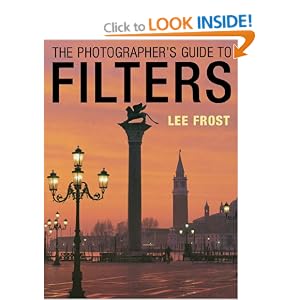
I read books and sought advice from the pros. One problem is that if you look for a book on filters, you usually get 90% of it about Photoshop filters. I found this one helpful. The very fact that it's not recent means that it's dealing with the basics - filtering light - and gives examples shot with physical filters.
amazon.co.uk link
This is what I decided filters could do for me that Photoshop couldn't:-

Filters 

1. balance exposure for an extremely wide dynamic range (very bright and very dark both present), in one shot; for instance, the sky is usually bright and the land is dark, so to expose correctly for both, you need several shots at different exposures (bracketing), a right pain if clouds are moving. With a gradient filter, you can darken just the sky area. With more than one filter you can adjust more areas. It will always be fairly clumsy but it give you better raw material in to work with, in one image.

2. allow a slower shutter speed, by darkening the scene, so you can turn water milky, make speeding cars into blurs and create light trails.

3. remove glare/reflection and polarise light, resulting in more dramatic colours.

You can see where my filter choice comes from now, can't you?

1. The graduated ND filter. If you mainly shoot landscapes with a hard horizon (like sea/sky shots), choose the hard filter. If you love wide angle, the received opinion is that soft is better with a wide angle lens. If you shoot scenes with murky divide lines between light and dark, choose soft.  0.6 or 0.9? Personal preference but I have a 0.6 hard grad ND and a 0.9 soft grad ND and it's the latter that's on my lens all the time for a landscape shoot.

Here are two shots, one taken in  Life Before Lee; the other in LAL, with the 0.9 soft grad N.D. and with Photoshop processing too - it's allowed! But if the raw material isn't there (e.g. sky) you have nothing to work on. Incidentally, taken in much the same weather conditions. Obviously I went for a wider shot the second time but from the same very dangerous place on a narrow bridge with my tripod and my knees shaking every time a lorry wooshed past me.


Camares in the Causses region of France, without filter

Camares in the Causses region of France, with filter


2. The Big Stopper lets you get that shutter speed right down for the milky water shots so popular now. I want one! But I might have to get a screw-on for one of my lenses because my precious wide-angle, the Nikon 14mm-24mm, has reduced my options on the mount, unless I buy two sets... and Santa says I have not been THAT good. More later about the practical side of mounts and Nikon.

3. The circular polariser does what it says. It should be on the outside of your stack of filters if you're using more than one. Photoshop plug-in Color Efex offers a good polarising filter and I believe Lightroom does too, but you'll get more mileage from Photoshop polarisers if you start with better raw material.

SO WHAT FILTERS DID I BUY?

I love my Nikon 14mm-24mm. Many say it is the best lens ever made. I love it. I love the drama of shooting wide. But everyone knows this is an ugly baby with a big, bulbous impossible-to-fit-filter-to-it end. Lee did it. They made a bulky, awkward contraption with extra large square glass filters just to fit my beautiful baby. So I bought it. No-one puts Baby in a corner when there's a landscape to shoot. Maybe I'm crazy but love cannot be denied so I based my Lee decisions round my impossible, lovable wide-angle.

I also bought the adaptor, and two adaptor rings, so that I can use the same over-large filters with the two other lenses I use for landscape; my 14-24mm f2.8, 50mm f1.8, 70-200mm f2.8, all Nikon

I got the 0.6 hard grad N.D as part of the kit. I bought a 0.9 soft grad N.D. and this is THE one for me. I also bought a 0.9 N.D. (i.e. all over darkening) but if I could have a Big Stopper I wouldn't bother with this. I have a screw-on Circular Polariser and (OK we're all suckers :) a fun star filter that cost me next to nothing  - it's just FUN)

I think I might ask Santa for a B&W  -10 screw-on filter seeing as Lee CAN'T make a Big Stopper for the huge wide angle mount, nor a polariser.

So I've sacrificed a fair bit to use filters on my wide angle. If I was rich, I'd probably just buy the two mounts, but I'm not. Like most of us, I can figure out ways of blu-tacking filters on top of filters. Unlike most of you, who have some manual dexterity, I no sooner had the Lee system screwed together and fixed on my lens than I turned the filter too much, the wrong way and the whole set-up came apart, fell on a rock and scratched the 0.6 hard grad N.D. I suppose it could have landed in the waterfall instead.


Anything that screws on, screws off! Watch which way you turn your filters!


This is what my wide angle does for me. Did I mention that I love it?

Dawn on Camargue marsh - catching the wind


However, if I'm going to take landscape shooting seriously, filters are the last consideration after putting the basics into place.

BASICS of landscape shooting before 'adding on' filters

Get your field guide here if you didn't pick it up earlier, and make cheat sheets from the excellent tips for each landscape type so you can take it with you and use it! There's advice on shooting the coast; woodland scenes; mountain tops; and rural areas.

My advice
1. Choose your place. Get to know your place as much as you can. If it's local, you can check it out at different times/seasons. If it's not, and it's a famous place, you can look at other people's images before you shoot - not to copy but to have pictures in your mind, ideas on 'what works', or on what's been done a zillion times, so you can have a take of your own. If you prefer to be without prejudice, fine. I sometimes do one, sometimes the other, and I'm just a beginner.

2. Find the spirit of the place. Of course it's subjective, but I personally don't relate to vivid, sunny, extreme HDR processed images of Venice. A friend who's been to Venice many times showed me his latest shots, so excited that 'November is the time for Venice!' Blues, mists, moody, ethereal - yes, that's Venice for me too. 

3. Shoot at dawn or dusk, during the 'blue hour'. If you choose a different time, CHOOSE it because of what the light does then. If you shoot at that time just because that's when you're there, don't expect pro quality shots.

4. Match lens and composition. A wide-angle needs foreground interest; a long lens compresses those layers of mountains and tree-lines. A stitched panorama captures the scope of a fifty-mile canyon. What do you want to shoot?

5. Use a tripod. Use a slow shutter speed.

6. NOW decide what a filter can to improve the shot!


the highest perched syncline in Europe - Valley of Saou, France


Wednesday, December 5, 2012

Christmas book for free


Celebration Time! Free Christmas book


Global Awards winner, historical novel ‘Song at Dawn’

ebook giveaway until 24th December

Visit Sooz says stuff

get the coupon number and use it at the smashwords checkout 


Great site for writers and readers


My short story 'Jailbait' won November's 'Paragraphs of Power' Competition - read 'Jailbait and all the other entries here. But be warned -  my story has teenage content - much worse than adult!

As someone who was teacher for many years, I've come across relationships between teachers and pupils that crossed the professional line. My own view is that a teacher is a position of trust, and it is a betrayal of that trust to initiate or to get drawn into a sexual relationship with a student. The recent example of a teacher fleeing the UK to France with his 15 year old pupil/lover raised all kinds of issues, including the differences between countries as to the age at which it's legal to have sex. My view is that the age difference between the partners is important. A 35 year old - man or woman - who has a sexual relationship with a 15 year old is, again, betraying trust. A 16 year old who has a sexual relationship with a 15 year old is hardly any different from the 'victim' - except in the eyes of the law.

Literature is full of stories where the line was crossed between adult and child, including that between teacher and pupil. All those I can think of are from the point of view of a male teacher, like in the lyrics 'Don't Stand So Close to Me' so I wanted to tell the story from the viewpoint of a fifteen year-old girl...

Paragraphs of Power

Why not enter your own story for Suzy's great competition? The next one is in January. In my winning month, November, there was an amazon book token as prize.You also get to present a book of your choice during the month you win.

Book news

It does look like I'll be able to publish 'Bladesong' early in 2013 - yay!

The verdicts on my new novel, in manuscript form, are coming in from my 'critical friends' and my editor; mostly positive (thank God!) but lots of minor corrections/tweaks. As I work through, I'll let you know the sorts of things that need to be changed. I can tell you the sorts of thing I don't want to change - the idea of any major re-organisation or plot change fills me with dread. But if it will be a better book that way, I will think seriously about every suggestion made.

comment on the Troubadours' facebook page and enter the free draw for a signed copy of 'Song at Dawn'


Dead but not silenced - one woman's true story

My other writing news is about a translation project; I'll tell you more about that when I can. If I say that it's a French autobiography that I'm translating into English,which starts with a fairytale romance, results in rape and a child custody case, and finishes with a young woman's death in suspicious circumstances, you won't believe me. But that's the truth.