Showing posts with label advice. Show all posts

Saturday, March 31, 2018

Finding your Voice: Ian M. Walker


Have you ever wondered about narrating an audiobook? 
If you read my 2012 blog about my experience as an author-narrator you already know why authors can be the worst narrators of our own books! And why choosing the right narrator is so important. The moment I heard Ian's submission for Someone To Look Up To, I knew I'd found the voice of Sirius and, since publication three weeks ago, listeners are agreeing with me. So who is the man behind Walker's Words? And what's the inside story on being a Voice?

Ian M. Walker is a Brit living in Los Angeles who broke the shackles of many years in the corporate I.T. world to follow a more creative dream. He is known for 5* audiobook narration in his 'deep, gravelly voice'. He has an upcoming part in a stop-motion film, upcoming animation narration, completed Orcish feast voices and ambience for an upcoming role-playing game by World Tree Studios. 

As Ian is a Voice, he decided to answer my questions live for you, on video, so you could see him working and so he could expand on his answers. You can enjoy the full version of Ian's interview here and I can only say that I was moved to tears by the end of it - good tears.


 Welcome to my blog, Ian! 

Tell me a bit about yourself - where do you live and what do you do when you’re not recording a book?
Originally from England, I live in Los Angeles, CA. I’ve actually now been over here for longer than I lived in the country of my birth! When not recording I’m usually playing with my dog, Bailey, reading, swimming, playing a computer game or visiting friends.

Ian and his Catahoula Leopard Dog (with that beautiful coat!) x pitbull, Bailey in McArthur park
Can you give me a brief picture of your personal journey as a Voice Actor?
After a long career in I.T. and one too many lay-offs, I started to put serious thought into what I actually wanted to do when I grow up. I.T. had been good to me but it never fulfilled me. I did some traveling and during that time, I came across an ad for a voice assessment. I went along, heard myself recorded in a professional booth for the first time and a fire was lit in my belly. I just completed my fourth complete audiobook and I’m working on the fifth. I may also be voicing Einstein the English Elephant in an independent stop-motion film. Since elephants have always been my favourite animal, that would be fun. I definitely intend to do some voice work for gaming.

How do you prepare for recording an audiobook?
Initially, I read the book. I try to just enjoy it as a reader would but, of course, I’m already starting to think of the voices. I’ll speak with the author in case they have input or I need to clarify anything such as words, accents, etc. When it comes time to record, it varies. Sometimes, the voice(s) will just come to me. With others, I may try a few out and see which I prefer. If there are a great many voices I’ll usually record snippets which I may refer back to.

Do you network with other Voice Actors? Are there any sites you’d recommend?
Absolutely! I have quite a few peers I’m connected with via social media. There are a great many voice groups out there so I’d rather not favour any single one. One thing I would mention, though, is that I’ve always found these groups and my peers to be very helpful. I heard early on that, unlike other areas of the entertainment industry, voice is less cut-throat and more about lifting one another up. So far, I’ve found this to be the case.

How can an author help the Voice Actor/ Producer of his/her book?
Hmm, an interesting question. Though I don’t have a great deal of personal experience yet, from what I’ve read some authors can be quite hands-on whilst others leave it to the Narrator. Usually, though, this IS a partnership so there ought to be some discussion. Steering clear of too much description of tone/flavor would be helpful as it isn’t always easy to understand exactly what the author was going for. One thing which would be nice, though it is likely not feasible, is if the author could consider, when writing, just how long a sentence they are writing (without any pauses) and how that might affect the poor narrator as they attempt to voice it without expiring. πŸ˜‰
Hahaha. Guilty as charged!

 Are there ways in which authors can hinder or even spoil the Voice Actor’s recording of a book?
Micro-management. Changing their minds causing many re-records.
If you could wave a magic wand and change something about your career what would it be?
I’d be a little further along. More established. More known. Because, hopefully, such a position lessens the bane of all creative types – the weakening of self-confidence/belief in oneself.
That is exactly how I feel! You say more about this in the video and I can identify with all of it!

Tell me about your working day. Do you work to a routine? Do you use a recording studio? Endless cups of coffee or tea?
I have an audio booth I created out of a large (5' x 5' x 8') closet. It has walls treated with Auralex acoustic tiles, thick carpet, etc. Despite being from England, I never had the endless cups of tea habit and now, I rarely drink it or coffee. I’m always drinking water. I always have, thankfully. 

I always warm up. First, I’ll do some singing along to music as I’m checking emails and what not, then I’ll follow the routine of a friend and peer, Amy Walker (no relation) immediately prior to any recording session. Try the routine yourself!

Who or what has been the greatest help to you as a Voice Actor?The helpful people of the forum for the free software I mainly use (Audacity) and of the ACX Facebook group.
What has been the hardest thing for you to overcome in becoming a Voice Actor?
Lack of self-confidence. This hit me hard over the past year or so due to some personal challenges/events which had nothing to do with my voice work.

If you could pick one character in one of your audiobooks, to spend some time with, who would it be and why?
I can’t give just one, it has to be two. 😊 First of all, Sirius from Someone To Look Up To by an author you may know because I love dogs and I feel I got to know him so well so I’d love to meet him. Secondly, Gon from The Oldest Living Vampire series by Joseph Duncan because - come on! - he is 30,000 years old! How fascinating that would be.

Tell me about your latest audiobook and why we should all buy it?
My first three books are all of a supernatural bent. This is fine for me as my favourite genres are sci-fi and horror. Of course, this isn’t a realm all readers enjoy. Due to this, plus having to overcome the aforementioned challenges to finish this book, Someone To Look Up To is something I’m going to cherish dearly. It is a book which appeals universally and one which became a crucible of sorts for me. 

Beyond my very personal reasons, it truly is wonderfully written. There were times I would come out of the booth, interact with my own dog, Bailey and I’d find myself looking at her differently, even asking her if she was doing what I had just read about. I had to keep on reminding myself that this was a book of fiction, not fact! It takes one into the psyche and thoughts of a dog so well. 😊

Bailey in her famous pink raincoat (to misquote Leonard Cohen). Ian was fed up of people assuming that Bailey was male so she always wears pink.

Thank you, Ian. Your narration brought my book alive for me and I loved every moment. Readers can listen to Ian reading Chapter 2 of the audiobook here and judge for themselves how Ian 'became the voice of Sirius, and made Sirius and the others feel so real'. (5* review)


What are you working on next?I have already started on the next in the Oldest Living Vampire series. After that, though, I’m going to try to spread my wings a little. I’d like to go for some computer game or commercial work and perhaps one or two non-fiction audiobooks.

Where can we find you?
The easiest way is via my website,  as it has links to all of my social media. 

You can buy Someone To Look Up To audiobook FREE to new audible members from
Amazon (US) Amazon (UK) iTunes: The book is available from bookstores

Tuesday, May 23, 2017

What kind of photographer are you?


Athabasca Glacier, Canadian Rockies, twilight

In my ongoing search for what sort of photographer I am and how to improve, I've had another professional portfolio assessment, this time from Getty Images. Although focused on stock photography, the comments apply more widely.

'Your best qualities as a photographer are working with real people, real situations and natural light.'

You have to love the stock world distinction between glamorous models and 'real people' :) and 'real situations' means acted-out situations that look real. As to natural light, I do enjoy fooling around in the attic studio with speedlights but, well, yes, 'let's go outside' is more me.


So I know how I could sell more photos as stock but who am I as a photographer, apart from stock? Sometimes knowing who you are NOT is very helpful and I've learned that photography is not just about liking the subject; it's about YOUR personality and lifestyle. So, who are you? Do you recognise who you are - or who you're not? Feel free to add some categories in your comments!

Landscape Photographer

You rise at dawn, spend the day complaining about harsh light and too much sunshine, then come alive again during the twilight blue hour and into the night. People exist to show scale as 'figures in a landscape' and are of no interest in themselves. In fact, people are irritating and you prefer there to be no people at all. You love slow exposures. Tripod, patience and natural light are your tools. You're willing and able to hike to impossible places, carrying 50kg of gear, to get The Shot.

Check out these photographers for great landscapes (and more):-
David duChemin
Chris Hepburn
Ryerson Clark
Paula Connelly

Athabasca Glacier, Canadian Rockies 6 am

Night Photographer

You come out at night, seeking places that no sensible person would go in the dark. Your partner is used to you sneaking out of bed, throwing on some clothes and going out. He/she has given up telling you it is dangerous. Whether in mean streets or trackless wilderness, you wear a cloak of invisibility that, along with your tripod, protects you from violent lowlife, human or animal. Your exposures are so slow they make people disappear and only the essential remains. You love stars. You might even specialise in astral photography.

La Belle Vie

Landscape and night photographer Tommy Dickson said 'I love turning night into day.'

Wildlife Photographer

You have inhuman patience. You could watch a patch of grass all day because three years ago a rare insect was seen on that very spot. You are a stalker. You know your subject intimately; how it behaves, where it goes; its mating habits. You have a David Attenborough commentary going on in your head at all times. You are happy to get close-up and personal with creatures that have big teeth. You think photo manipulation is cheating. You need a telephoto lens that costs the price of a house. You can lose the hiking/carrying and financial requirements if you opt for the macro version and shoot tiny wildlife, close-up.

Finalists in Wildife Photographers of the Year 2016
Check out the wildlife photos (and more) by Guenter Gueni

Street Photographer

You have no scruples about shooting strangers' private moments in public places. You shoot fast and have an eye for composing a candid scene, capturing relationships, emotions and urban settings. Usually, nobody notices you sneaking photos but every now and then a subject looks at camera with a smile, or shock or indignation. You shoot with an unobtrusive prime, probably 35mm, and you like black and white processing.

Apart from the iconic Cartier Bresson, one of the most famous street photographers is Vivian Maier, the nanny, who perfected invisibility but whose photos were never seen until after her death. Modesty? Lack of money for prints? Or scruples about the strangers whose lives she presents?


Photojournalist

You care passionately about human rights, the planet and freedom of information. You want everyone to know what's happening in 'the rest of the world' so you risk police harassment, even rape or murder to portray the truth. You started as a travel photographer but you left your viewers' armchair comfort zone and you want to change their attitudes, startle them, stir them into action. You carry two cameras, no tripod, and you like shutter priority - it's not a question of shooting fast, but rather of how fast you shoot. If you slow down, it's to photograph the people who ought to be in the news, not the people who are. Home can be boring.

Two outstanding photojournalists:-
Anna Puig Rosado
Lynsey Addario

Food Photographer

You buy vast quantities of cookbooks and food magazines for the photos. Eating is a pleasure and you see food as beautiful. An aubergine is sexy and you can see what colours would set it off to perfection. Your house is full of unmatched plates, cutlery, serviettes and other objects bought as food props. Your partner is trained to ask whether you have photographed an item of food before he risks your wrath by eating it. Outdoors/indoors; tripod/free-range; macro/telephoto lens; your choice. As long as you see food items as glamour models, you're a food shooter.

French buche de Noel / Christmas log

My food photography inspiration includes Kelly Cline, whom I met online thanks to istock, and Helene Dujardin (what a great name for a French food shooter!)

Studio Photographer

You're a perfectionist and control freak. There must be no light or shadow in your image but what you allowed and intended. You can shoot beautiful studio portraits but, if you're honest, people are a little difficult to control and what you like best is a perfectly lit product shot. Your studio does not only have lights and every kind of modifier known, including mirrors and gobos; it has a beam and rail systems. You know how to name and use every piece of technology you have and what you most want is a smoke machine. Your assistant takes his/her shoes off at the impeccably clean threshold and whispers while you work.

You know who you are :)

Portrait Photographer

You're a people person. You can make someone relax in front of a camera; talk, laugh, fool around. People trust you and show you who they are, who they want to be and then magic happens. A portrait is an interactive threesome and, unlike food or landscapes, the subject has opinions and can hate the photo. Relationships can hurt and if you don't know what the other person wants, you can both be disappointed; if you work together, you can have more fun than ought to be allowed when working. Studio or natural light; tripod or not; still or movement; your favourite portrait lens (mine's an 85mm f1.4) Just steal somebody's soul!


Check out the portraits (and more) taken by Richard Clark

Architecture Photographer

You get excited at diagonal lines and architraves. You have the urge to lie on your back and shoot a cupola or skyscrapers. Stairwells induce pleasure overload. You are THE mathematical photographer, always aware of symmetry and straight horizontals. If a human being is in front of you, what you see are circles, verticals and curves. Sorry, did it say something? Your weapon of choice is a tilt-shift lens but you'll settle for a wide-angle that doesn't vignette.

Ceiling, The Palace of Joy, Zaragossa

Fashion Photographer

Designer labels and colour co-ordination make your shutter-finger twitch. You know about handbags. Only young, beautiful people exist and you can charm them into impossible poses to show off the real subjects - clothes and accessories. Star-jumps on rooftops and clinging to a cliff-face are only some of your ideas to display voile floating. You are inseparable from your favourite stylist and make-up artist.


Check out three-times-winner of Malta's Fashion Photographer of the Year Kurt Paris , and stunning work from Nils Kahle

Sports Photographer

You don't just support one team; you support twenty and you know the rules of every game, underwater, over hurdles and in the sky. You love action, motion, effort and achievement, winning and losing. If it moves, you shoot it. You like panning, tracking and motion blur. Forget the tripod and sell the house for a super-fast telephoto lens.

Check out Charlie Mann's work.

Of course there are overlaps and specialisms within specialisms; timelapse, underwater, lo-fi, baby-mugging and Pellier Noir are just some that came up when I googled photography categories!

My photographic adventures in 2016 have included organising and shooting professional models in Paris with some amazingly talented photographer friends; giving a ten minute presentation on my work at a Getty Images event; and testing my landscape skills in Zaragossa, Northumberland and the Canadian Rockies. Next weekend I'm attending a portrait workshop with Anna Puig Rosado who lives only 30 minutes from me and is not only internationally respected as a photojournalist but also a warm, friendly person and a great teacher. Watch this space!


Thursday, January 3, 2013

The 3 most emotional scenes in fiction ever


Negative


I was asked to write a guest post for Sooz Says Stuff, a great blog by an Australian writer, and I got all emotional. Or rather I started thinking about how writers can get readers all emotional. I've given some tips in my post here on how to make readers FEEL and I also thought about which scenes in fiction make me feel emotional, and why they work.

Emotion


These are three of my top scenes in fiction for making me really FEEL - which scenes would you pick? How much of the choice is because the situation strikes a personal chord, and how much of it is because it's so well written?

1) Baloo and Bagheera vouching for Mowgli in ‘The Jungle Book’ by Rudyard Kipling. I suppose I’d like a bear and a black panther, outsiders like me, to stand up for me in public, in front of the whole wolf pack.

2) Bathsheba fighting to protect the hay in the storm, with Gabriel Oak, in ‘Far From the Madding Crowd’ by Thomas Hardy. I think there’s something very sexy about a couple working in a physical activity together, particularly when fighting the elements. To me, this is one of the most romantic scenes ever written because the reader knows that Gabriel loves Bathsheba, and the fact her useless husband is in a drunken stupor adds to the undercurrents.

3) The ending of 'Brighton Rock' by Graham Greene. This is the most terrible, heartbreaking, pessimistic scene I’ve ever read and yet it is all in the reader’s imagination. You know that what is about to happen will destroy all Rose’s naΓ―ve illusions about Pinkie.

Read the rest of my blog post here.

Positive

Friday, December 7, 2012

An Idiot's Guide to Camera Filters


Misty morning in the Camargue
No, this isn't a guide FOR idiots; it's a guide BY an idiot. A couple of people have been asking me for advice on filters, so here it is. And that's all it is. MY advice based on personal experience this year. If my experience can help someone else, especially BEFORE you decide to spend all that money on buying a filter set, I'm happy to share.

You just want to know what to put on your list for Santa?

1. A Lee filter mount for your camera. Why Lee? Because there's a reason it's so expensive - it's well-made. This matters to me because I'm the sort of photographer who once reversed the car over my full camera bag. I only smashed a couple of cheap screw-on filters - the Nikon camera and lenses took the hit and lived to shoot another day (another two years actually, so far). Now you know why I'm sticking with Nikon. Oh, and my husband does not know about this particular test of my gear - please don't tell him.

2.  A 0.9  (-3 stops) soft graduated N.D. filter.

3. A Circular Polariser.

You've been very very good this year?

4. A Big Stopper     -10 stops Neutral Density filter

Be warned! Santa could have to go on a waiting list for your Lees as they're more popular than a Doc McStuffins 'time for your check-up' doll.

And get this great guide to shooting landscapes here 

Want to know more about the choices you make? Read on!

If you have any questions or comments after reading this, please post and I'll reply.

You want to improve your landscape photos? 

This was my aim, when I went on a joint shoot with nine other photographers in June. One of them was a very talented young photographer, Chris Hepburn,  who specialises in landscapes. Take a look at his portfolio! I was very keen to learn from him, which meant getting up at 3am to get to our chosen location before dawn. A few of us all took shots of the same place, at the same time, and then looked at the shots Chris had taken. Even allowing for his technical and artistic expertise in his specialism, there was no doubt that using filters gave Chris a range of possibilities that I didn't have without them.

Les Saintes Maries de la Mer, Camargue

You're wondering whether filters are worth the money?

FILTERS can be physical accessories or various Photoshop layers that modify an image. Some photographers have told me that Photoshop filters do everything they want, so they don't need physical filters. If that's your view, stop reading. You've got what you want.

If you don't want to spend the time attaching stuff and setting up your tripod, get some screw-on filters and stop reading now.

Filters, especially Lees, COST A LOT, so I had no intention of buying anything that merely replicated what I could do in Photoshop. So I ruled out all the prettifiers; coloured filters, fancy patterns, stars etc

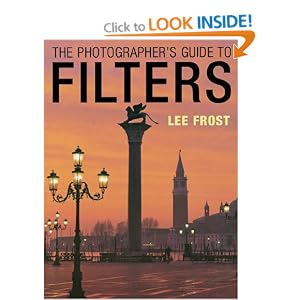
I read books and sought advice from the pros. One problem is that if you look for a book on filters, you usually get 90% of it about Photoshop filters. I found this one helpful. The very fact that it's not recent means that it's dealing with the basics - filtering light - and gives examples shot with physical filters.
amazon.co.uk link
This is what I decided filters could do for me that Photoshop couldn't:-

Filters 

1. balance exposure for an extremely wide dynamic range (very bright and very dark both present), in one shot; for instance, the sky is usually bright and the land is dark, so to expose correctly for both, you need several shots at different exposures (bracketing), a right pain if clouds are moving. With a gradient filter, you can darken just the sky area. With more than one filter you can adjust more areas. It will always be fairly clumsy but it give you better raw material in to work with, in one image.

2. allow a slower shutter speed, by darkening the scene, so you can turn water milky, make speeding cars into blurs and create light trails.

3. remove glare/reflection and polarise light, resulting in more dramatic colours.

You can see where my filter choice comes from now, can't you?

1. The graduated ND filter. If you mainly shoot landscapes with a hard horizon (like sea/sky shots), choose the hard filter. If you love wide angle, the received opinion is that soft is better with a wide angle lens. If you shoot scenes with murky divide lines between light and dark, choose soft.  0.6 or 0.9? Personal preference but I have a 0.6 hard grad ND and a 0.9 soft grad ND and it's the latter that's on my lens all the time for a landscape shoot.

Here are two shots, one taken in  Life Before Lee; the other in LAL, with the 0.9 soft grad N.D. and with Photoshop processing too - it's allowed! But if the raw material isn't there (e.g. sky) you have nothing to work on. Incidentally, taken in much the same weather conditions. Obviously I went for a wider shot the second time but from the same very dangerous place on a narrow bridge with my tripod and my knees shaking every time a lorry wooshed past me.


Camares in the Causses region of France, without filter

Camares in the Causses region of France, with filter


2. The Big Stopper lets you get that shutter speed right down for the milky water shots so popular now. I want one! But I might have to get a screw-on for one of my lenses because my precious wide-angle, the Nikon 14mm-24mm, has reduced my options on the mount, unless I buy two sets... and Santa says I have not been THAT good. More later about the practical side of mounts and Nikon.

3. The circular polariser does what it says. It should be on the outside of your stack of filters if you're using more than one. Photoshop plug-in Color Efex offers a good polarising filter and I believe Lightroom does too, but you'll get more mileage from Photoshop polarisers if you start with better raw material.

SO WHAT FILTERS DID I BUY?

I love my Nikon 14mm-24mm. Many say it is the best lens ever made. I love it. I love the drama of shooting wide. But everyone knows this is an ugly baby with a big, bulbous impossible-to-fit-filter-to-it end. Lee did it. They made a bulky, awkward contraption with extra large square glass filters just to fit my beautiful baby. So I bought it. No-one puts Baby in a corner when there's a landscape to shoot. Maybe I'm crazy but love cannot be denied so I based my Lee decisions round my impossible, lovable wide-angle.

I also bought the adaptor, and two adaptor rings, so that I can use the same over-large filters with the two other lenses I use for landscape; my 14-24mm f2.8, 50mm f1.8, 70-200mm f2.8, all Nikon

I got the 0.6 hard grad N.D as part of the kit. I bought a 0.9 soft grad N.D. and this is THE one for me. I also bought a 0.9 N.D. (i.e. all over darkening) but if I could have a Big Stopper I wouldn't bother with this. I have a screw-on Circular Polariser and (OK we're all suckers :) a fun star filter that cost me next to nothing  - it's just FUN)

I think I might ask Santa for a B&W  -10 screw-on filter seeing as Lee CAN'T make a Big Stopper for the huge wide angle mount, nor a polariser.

So I've sacrificed a fair bit to use filters on my wide angle. If I was rich, I'd probably just buy the two mounts, but I'm not. Like most of us, I can figure out ways of blu-tacking filters on top of filters. Unlike most of you, who have some manual dexterity, I no sooner had the Lee system screwed together and fixed on my lens than I turned the filter too much, the wrong way and the whole set-up came apart, fell on a rock and scratched the 0.6 hard grad N.D. I suppose it could have landed in the waterfall instead.


Anything that screws on, screws off! Watch which way you turn your filters!


This is what my wide angle does for me. Did I mention that I love it?

Dawn on Camargue marsh - catching the wind


However, if I'm going to take landscape shooting seriously, filters are the last consideration after putting the basics into place.

BASICS of landscape shooting before 'adding on' filters

Get your field guide here if you didn't pick it up earlier, and make cheat sheets from the excellent tips for each landscape type so you can take it with you and use it! There's advice on shooting the coast; woodland scenes; mountain tops; and rural areas.

My advice
1. Choose your place. Get to know your place as much as you can. If it's local, you can check it out at different times/seasons. If it's not, and it's a famous place, you can look at other people's images before you shoot - not to copy but to have pictures in your mind, ideas on 'what works', or on what's been done a zillion times, so you can have a take of your own. If you prefer to be without prejudice, fine. I sometimes do one, sometimes the other, and I'm just a beginner.

2. Find the spirit of the place. Of course it's subjective, but I personally don't relate to vivid, sunny, extreme HDR processed images of Venice. A friend who's been to Venice many times showed me his latest shots, so excited that 'November is the time for Venice!' Blues, mists, moody, ethereal - yes, that's Venice for me too. 

3. Shoot at dawn or dusk, during the 'blue hour'. If you choose a different time, CHOOSE it because of what the light does then. If you shoot at that time just because that's when you're there, don't expect pro quality shots.

4. Match lens and composition. A wide-angle needs foreground interest; a long lens compresses those layers of mountains and tree-lines. A stitched panorama captures the scope of a fifty-mile canyon. What do you want to shoot?

5. Use a tripod. Use a slow shutter speed.

6. NOW decide what a filter can to improve the shot!


the highest perched syncline in Europe - Valley of Saou, France