Monday, January 6, 2014

What's in a name?


If it's a book title, the name is crucial! 

Choosing a book
What if Fifty Shades of Grey had been called Disempowered two-dimensional woman gets sexually abused by equally two-dimensional rich, sadistic man ? ** Disclaimer ** I haven't read Fifty Shades.. and am creating a phony title, based on random negative reviews of a bestseller, to make my point. Please don't sue. My point being that I think Fifty Shades of Grey is a great title. It is short, memorable, thought-provoking, rich in double meanings, metaphorical, indicates genre and is original (as far as I know).

A book title has two jobs; to attract readers and to accurately represent the content. It is married to the book jacket and if they're heading for a divorce, the reader will be put off spending time in their company. If Fifty Shades of Grey had a cover image of a happy two-parent family, with a cute dog, on the jacket, the potential reader would be confused, especially after reading the blurb (the small print in the implicit contract between writer and reader). If title and jacket do a brilliant job of attracting the reader but the book is then nothing like expected, the reaction will be disappointment and negative comments about the writer. You can't please everyone, or cater for all subjective reactions, but you can at least try to find the right readers for the book you've written, by using current 'first impression' conventions.

If you don't care whether readers enjoy your book, or come back to read another one by you, as long as they buy this one, none of these principles apply to you. Most of us writers, however, get our kicks from the readers who love our books - and that means finding readers, yes, but also finding a good match between readers and books.

Finding a title you're happy with is difficult and whether it's a 'good' title is for other people to judge. When I'm planning a book, I have a working title that might change many times before publication. I always look up my title on amazon to see whether it's been used already. If so, I think again, unless the title is out of print or in a niche that doesn't clash with my book. If there are similar titles, I consider their genres - if they are all in a very different genre to my book, I am on the wrong track for reader expectations.

I do test the title (and jacket) out on other people, and consider their feedback, but once the book is written, I work on gut instinct to recognize the title that fits. That's how it feels to me; not like creating a title but like finding it. I feel the same about naming dogs; you can come up with beautiful names in advance but when you actually see the living creature, you know he's called Spud, and that's just how it is.

Working as I do is terrible for advance marketing - how can you work up reader enthusiasm for a book with no title? As with many aspects of writing, there is a clash between what suits me as a writer and what is best marketing practice. If I'm not sure about the title, I would rather wait till I know it for sure than regret the choice forever. If I'd gone with the first working title,

Snake on Saturdays would have been Twisted Yarn. The heroine runs a hand-knit business and I liked the double meaning. One of my failings is to laugh at my own jokes but I now think Twisted Yarn is a truly awful title for a novel.

Someone to look up to would have been Sirius, after the main character, a dog. Not so bad as a title but 'someone to look up to' is such an important concept in the book, that I didn't understand until I was writing, and that was a revelation for me as well as for Sirius. I love this title.

Bedtime story

Gentle Dog Training, my translation of Dressage Tendresse was not just a book title but a method of dog training and I had to fight my corner to avoid Tenderness Training (a great alternative to Fifty Shades of Grey), or Train Me Tender and all kinds of ambiguity.

On the Other Hand would have been Sinister because the word 'sinister' originally just meant 'left-handed' and left-handedness is a theme in this YA book, which mixes fact and fiction. The Romans thought left-handed people were untrustworthy because they could shake hands with their right hand while stabbing you with the left, hence the more sinister meaning of ... sinister.

Here are the more recent ebook jacket and the original print jacket for On the other hand My publisher told me that we'd made one mistake - On the other hand starts with three words that get ignored in searches so the title doesn't show up unless you add my author name. You live and learn! Avoid using more than two high frequency words at the start of a title.
amazon link


Sometimes, the title just works, right from the start. My bestseller How Blue is my Valley took its title from the Welsh classic How Green was my Valley  and the 'blue' from the lavender of my current home in Provence. It just seems right for a book about someone moving from Wales to Provence and comparing the two. Alluding to a phrase or title with which readers are already familiar can work but it can also backfire as readers sometimes react against what they see as an attempt to cash in on fifty shades of copying.

I wish it was always so easy to find a title that suits! I have about twenty potential titles for the third novel in my 12th century series about Estela and Dragonetz but am not sure yet. The working title is Eaglesong but that's probably too suggestive of fantasy rather than historical novel and I don't know what eagles have to do with anything, apart from the castle and (probably) main setting being on high rocks. As it follows Song at Dawn and Bladesong, I thought Song somewhere in the title would link the series. I'm hoping all will become clear to me as I write.

Thanks to advice from fellow authors, I am also a big fan of the subtitle or tag as this can clearly indicate genre and add extra keywords to show up in online searches. I am sure that adding the real Provence in small print below How Blue is my Valley has helped find readers. For the Troubadours series, I've used date and place so I now have another headache as 1150 in Provence was used on Song at Dawn and now my characters are back there,  I don't really want 1152 in Provence... decisions, decisions, which I will have to make before the book jacket goes live.

Perhaps I should work the other way round; take a great title and write the book that it deserves. Helpful friends often suggest, 'You should write a book on..' and occasionally I'm even given titles. Drug Mule to Merthyr really ought to be written by someone but Going Home to Dai is more my style.

aggressive marketing


Tuesday, December 10, 2013

The Photograph, a short story


Last night was the Christmas party for our writers' workshop and as well as mulled wine, chocolate goodies and nougat (this is a small French village near Montelimar after all) we had our only competition of the year. The theme for this one was any piece on the title 'The Photograph' and I decided to join in for once. Not to compete of course - think of the humiliation if I didn't win! But seriously, I've always thought that it's good for the teacher to try at least some of the tasks set for the students - you learn a lot that way.

locket on black satin

Dedicated to all the photographers in my life:-

The Photograph


I thought I’d seen every over-decorated room in the house but no, there was always one more.  ‘This way, Mr Taylor,’ I was told. Hiding a yawn, I followed the owner into the conservatory, which piled chintz on wicker in a maze of small tables.  A ray of sunlight had forced entry through the Venetian blinds, dancing on glass and a woman’s smile, a brown-eyed gaze that passed directly to my gut, or lower.  She’d hit that sweet spot at the back of the lens, reaching the photographer, reaching me. That’s the real professional secret but no-one believes me, even if I tell them. Beauty is indeed in the way you look.
‘That's my late wife.’  He took the photo back from me, his tapered fingers stroking a curlicue at the edge of the gilded frame. Frowning with what could have been concentration, he replaced the portrait on what a thin line of dust revealed to be the exact spot that it had previously occupied. ‘Looking as if she were alive,’ he murmured, his finger-tip, delicate, tracing the woman’s throat from the jut of her chin down into naked shadows.
                ‘The sittings took an age but that’s why you pay a top photographer, isn’t it.  Not to make her give that smile.’ He nodded at me, complicit. ‘I saw you notice. Everyone does. Everyone did. There was no need to ‘make’ her smile – she smiled at every puppy, every ‘Have a good day’ from strangers, every clichéd compliment. If Drandle – yes, I see you know the photographer  – if Drandle said the light on her hair was pretty, or green suited her eyes, that would do it. She smiled at me too, the same smile. No moderation, no distinguishing between what I gave her – a name nine centuries old! - and their daily trivia.
                It wouldn’t do, you know.’ His finger tapped the glass, hard, once. ‘ So I stopped her smiling.’ He shook himself out of the reverie. ‘Enough about the Drandle. You must see the garden and gazebo; designed by Harbisher himself, the perfect background, don’t you think?  I’m glad you like the house.  My fiancée told me you’d be the ideal wedding photographer.  I think you’ll do nicely. Just the job.’

Some of you will have recognized the inspiration for my very short story; 'My Last Duchess', a famous 19th century poem. I don't see anything wrong with reworking old stories but I do think it's polite to credit the authors, regardless of how long they've been dead. 

Please let me know if you would like to use any of my work. If you're looking for workshop material, this poem (and my version) can spark all kinds of activities; themes, viewpoints, sequels, modern versions... 

Thank you, Mr Browning, for a story that lingers in the mind, a story of arrogance, jealousy, possession and murder.

My Last Duchess – Robert Browning 1842

That’s my last Duchess painted on the wall, 
Looking as if she were alive. I call 
That piece a wonder, now: Fra Pandolf’s hands 
Worked busily a day, and there she stands. 
Will’t please you sit and look at her? I said 
“Fra Pandolf” by design, for never read 
Strangers like you that pictured countenance, 
The depth and passion of its earnest glance, 
But to myself they turned (since none puts by 
The curtain I have drawn for you, but I) 
And seemed as they would ask me, if they durst, 
How such a glance came there; so, not the first 
Are you to turn and ask thus. Sir, ’twas not 
Her husband’s presence only, called that spot 
Of joy into the Duchess’ cheek: perhaps 
Fra Pandolf chanced to say “Her mantle laps 
Over my lady’s wrist too much,” or “Paint 
Must never hope to reproduce the faint 
Half-flush that dies along her throat”: such stuff 
Was courtesy, she thought, and cause enough 
For calling up that spot of joy. She had 
A heart—how shall I say?—too soon made glad, 
Too easily impressed; she liked whate’er 
She looked on, and her looks went everywhere. 
Sir, ’twas all one! My favour at her breast, 
The dropping of the daylight in the West, 
The bough of cherries some officious fool 
Broke in the orchard for her, the white mule 
She rode with round the terrace—all and each 
Would draw from her alike the approving speech, 
Or blush, at least. She thanked men,—good! but thanked 
Somehow—I know not how—as if she ranked 
My gift of a nine-hundred-years-old name 
With anybody’s gift. Who’d stoop to blame 
This sort of trifling? Even had you skill 
In speech—(which I have not)—to make your will 
Quite clear to such an one, and say, “Just this 
Or that in you disgusts me; here you miss, 
Or there exceed the mark”—and if she let 
Herself be lessoned so, nor plainly set 
Her wits to yours, forsooth, and made excuse, 
—E’en then would be some stooping; and I choose 
Never to stoop. Oh sir, she smiled, no doubt, 
Whene’er I passed her; but who passed without 
Much the same smile? This grew; I gave commands; 
Then all smiles stopped together. There she stands 
As if alive. Will’t please you rise? We’ll meet 
The company below, then. I repeat, 
The Count your master’s known munificence 
Is ample warrant that no just pretence 
Of mine for dowry will be disallowed; 
Though his fair daughter’s self, as I avowed 
At starting, is my object. Nay, we’ll go 
Together down, sir. Notice Neptune, though, 
Taming a sea-horse, thought a rarity, 
Which Claus of Innsbruck cast in bronze for me!


Thursday, November 21, 2013

My top 10 cookbooks


Looking for a present for the cook in your life, especially if that's you? These are my favourite 10 cookbooks in the 40 year journey from kitchen duffer to food photographer, from a few 'tried and tested' recipes and 'good plain cooking', to promiscuous eating - one-night stands with recipes that catch my eye. It's not that I don't enjoy them and want to repeat the pleasure but there's the lure of new sensations, feeding my inner Casanova.

'I have also been extravagantly fond of good food and irresistibly drawn by anything which could excite curiosity.' Giacomo Casanova, History of my Life


Feel free to add your favourite cookbook to my list and if I don't have it already, I'll add it to my wish-list.

Pink Reims biscuits

I want to say thank you to some of the cooks who've enriched my life and shared their love of food.

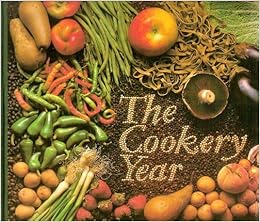
1974 The Cookery Year
amazon link The Cookery Year 1974 edition
'Jean can't cook. She has her nose in a book all the time.' My mother's description was probably accurate on both counts but it didn't stop her presenting me with my first cookery book when I left home at eighteen to go to university. I learned to cook from books and from experiments, with many disasters. 40 years later, this book is still on my shelf, long after I lost the parents who wrote 'Best culinary wishes' on the fly leaf and signed with love.

The 'basics' sections at the front and back are still the best I know, and the pages with clear explanations on cooking methods and terms are the most spattered with grease and stains of all my books. Organisation by month is good for using produce in season, the basis is British but recipes are varied and international. There are prettier cookbooks but if I could only have one, this would be my choice - well done, mother.

Favourite recipes - Welsh cakes, sweet and sour pork, dolmas (nowadays made with fresh vine leaves from the garden)

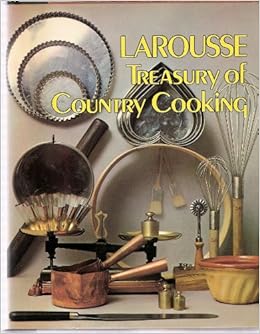
1975 Larousse Treasury of Country Cooking
amazon.com link
This was my second cookbook, an exploration of other cultures and cuisine. For someone from the sort of British army background where 'sauce' was considered filthy foreign muck, it was an eye-opener. I cooked more disasters than edible meals from its pages but I learned from my mistakes. I also learned that food is a way of relating to people all over the world, and that I'd missed opportunities already. When we lived in Hong Kong, my mother helped our amah gain promotion to cook-amah by learning to make chips (!). I wish I'd sat cross-legged with her on the floor by her wok and watched her make her own meals. But I was nine, Ah-ho liked my little sister and in those days I expected people to choose between us.

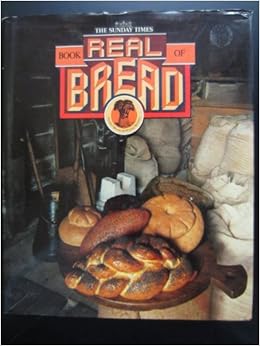
1982 The Sunday Times Book of Real Bread - multi-authors
amazon.com link
It's not fashionable in these days of gluten-free, dairy-free and vegan (and my family includes all manner of special dietary requirements) but I love freshly baked bread and cheese. Some women love chocolate; I can't resist dairy products. I was probably a mouse in a former existence. This book is remarkable for its contributors as well as its bread recipes from round the world; top cookery writers of the time have chosen their favourite bread recipes, tips and techniques. There are few photos and this is only for someone who seriously loves baking bread. I highly recommend the Cretan Olive Bread.


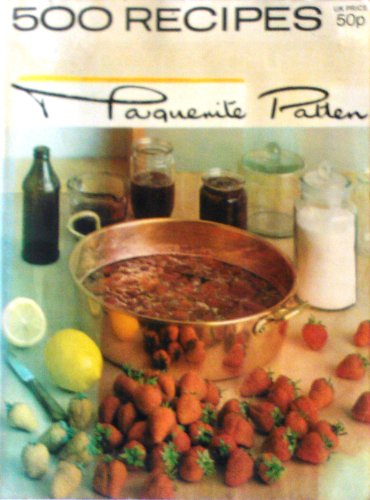
1985 500 Recipes for Jams, Pickles and Chutneys - Marguerite Patten
amazon uk link
Now a Collector's Item, first published in 1963. My 1985 edition contains 500 recipes for jam, pickles and chutney that all work. That's it. No frills, no photos, no entertainment. Marguerite Patten was my mother's favourite cook, author of the one cookbook in our house. Unfortunately that book went missing so this is as close as I get to inherited recipes, apart from the three favourites that my sister and I pieced together; our mother's Christmas cake, meat roll and pear suchard.

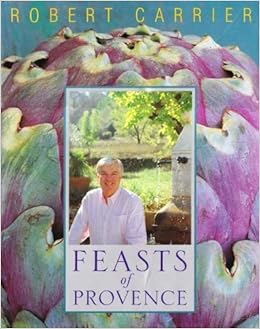
1993 Feasts of Provence - Robert Carrier 
amazon.com link
A mix of travel and cooking that shows an insider's Provence. Robert Carrier knows and loves the region and the food. He introduces us to the people who share recipes with him. This is where I now live and the classic Provencal recipes are here, including ratatouille, but the book also conveys a style of life and cooking. Garlic, tomatoes, olive oil, tapenade, toasts, grilled fish and sunshine.

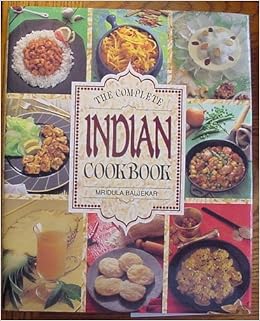
1994 The Complete Indian Cookbook  - Mridula Brijikar
amazon.com link
As with many of my cookbooks, I bought this one from one of the special discount offers that reps brought to the school where I was a teacher. I've cooked dozens of the recipes and all of them have worked perfectly to give me the sort of Indian dishes I love. A photo with each recipe so you know what the end product should look like, clear instructions and ingredients that don't scare you.

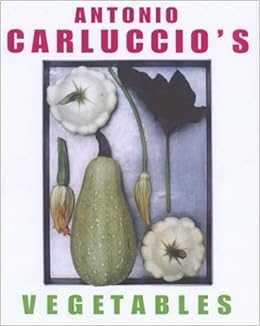
2000 Vegetables - Antonio Carluccio

amazon.com link

One of the TV chefs who has inspired me, Carluccio also changed the cooking of my sous-chef (aka my husband) with this book. It's organised alphabetically by vegetable, under its Italian names, which is fun when you get the hang of it. Making the vegetable into the star changes the perspective of many cooks and if you want meat as well, simple grilled meat can be served with these yummy vegetable dishes. Like most TV cooks, Carluccio introduces personal anecdotes into his books and gives you travel reading (Italy) and entertainment as well as recipes.

My other favourite source to feed vegetarian visitors is Rose Elliot's Vegetable Cookery but that never had the same impact on the sous-chef so Carluccio wins.

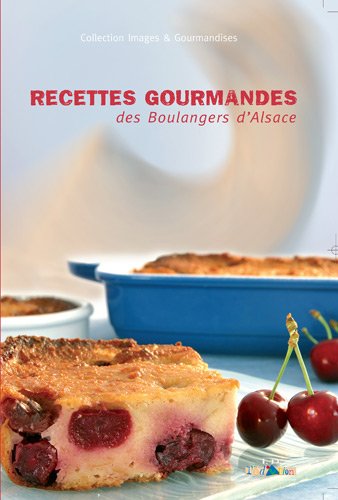
2004 Recettes Gourmandes des Boulangers d'Alsace Vol 1 and Vol 2
amazon
Another  that's apparently a Collector's Item now. I found this French gem in the Bakers' Tent at the Christmas Market, Strasbourg, 'the Christmas Capital of the World', Alsace. Completely authentic Alsace bakers' recipes and my Christmas wouldn't be right without something from this book - open it and smell the cinnamon in the mulled wine, hear the merry-go-round, taste fresh bretzels and shiver with cold. Maybe I should offer to bring out an English translation?

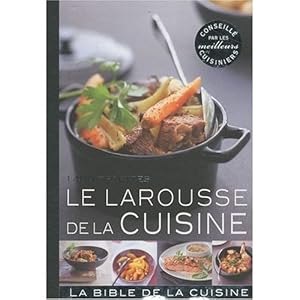
2005 Larousse de la cuisine
amazon uk link
I bought the earlier 2005 version of this when on a camping trip. It cost the most I've ever spent on a cookbook and was my first French one. I learned French food and cooking terms this way. 'La bible de la cuisine' is huge and French. It is organised alphabetically, which is incredibly difficult to find your way round but great fun for random enjoyment. The photography is beautiful and the recipes are inspirational, even if you can never find them again. The best French lesson I've ever had and a book I often dip into.

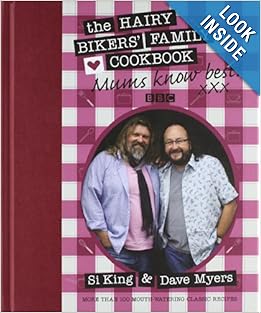
2011 The Hairy Bikers' Family Cookbook - Mums Know Best - Si King & Dave Myers


amazon link Mums Know Best
Mums Know Best combines nostalgia for family food traditions with an international repertoire that struck me paradoxically as the best of British cuisine. This collection of Britain's favourite family recipes, handed down through generations, draws from origins in Scotland and Lebanon, England and Nepal, That's exactly what Britain is good at - multi-cultural cuisine.

The DVD that goes with the book adds to making the recipes. It shows the Hairy Bikers visiting people's homes to choose recipes for their events and for the book; the events brought tears to my eyes as all the people lined up to talk about their hand-written recipe books and memories.That's what it's all about - not the Michelin chefs, culinary secrets and artistic presentation. It's about you and me, cooking good food for our friends and families, passing recipes on to the next generation.

When my son told me, 'You're an excellent cook,' I wish his Grandma could have heard him.  And she would never have believed that I would write a cookbook myself.

Buy from lulu.com in print 
Buy epub
Buy kindle


Near misses for the top 10:-

The Covent Garden Co - Soup & Beyond. Truly creative and tasty soup recipes from the company that put fresh soup onto supermarket shelves twenty years ago.

Jamie Oliver's The Naked Chef. Jamie Oliver is another TV chef who changed popular cooking and his first three books all make good reading and inspiring cooking.

Delia Smith's Winter Collection and Summer Collection. I fall asleep watching Delia on TV and am not fussed about cakes but I love her savoury recipes. She was the first to make Mediterranean ingredients and cooking style seem easy to British cooks. Her roasted vegetables, onion soup and casseroles are favourites.

Ken Hom's Hot Wok is perfect for me in its fusion of Asian and European style cooking. I like Chinese dishes but often find the recipes scary.

Jane Sigal Backroad Bistros Armchair travel round France through a superb collection of traditional recipes. No photos.

Over to you. Which is your favourite cookbook?

Wednesday, October 2, 2013

L O'Bryan's criminal success with puzzles

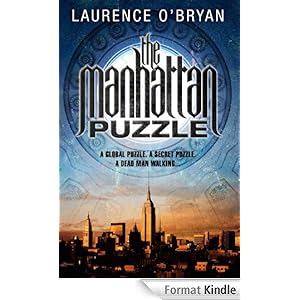
'Order your copy of the Manhattan Puzzle before they find out what’s in it. If anything fatal happens to the author know this: he would never commit suicide and he drives very carefully.'

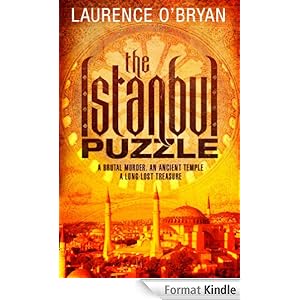
Laurence O'Bryan's first novel The Istanbul Puzzle was shortlisted for the Irish Crime novel of 2012. His roots go back to a small estate deep in the Mountains of Mourne, near the Silent Valley, in County Down, Northern Ireland. He went to school in Dublin, drank way too much, studied English and history, then business, then IT at Oxford University. 

In 2007 he won the Outstanding Novel Submitted award at the Southern California writer's conference for The Istanbul Puzzle. He says, 'I flew back to Ireland on cloud 999. It wasn't about the money. There wasn't any. It was about knowing I was on the right track.'

His research has taken him all over the world, from San Francisco to deep in the Muslim world. He likes looking at the stars and listening to the stories of strangers. 

Welcome to my blog, Laurence, and congratulations on the publication of the latest in your bestselling Puzzle thriller series,  'the Manhattan Puzzle'.


First Istanbul, then Jerusalem and now Manhattan; what made you choose each of these places as the setting?
Thanks Jean! We have high hopes for my third novel. I chose Istanbul because I visited it and it was so different from what I had expected. Jerusalem I chose because of its importance to so many people. And Manhattan because it always seemed such an amazing place, open, yet full of secrets.

 Will there be more Puzzle books? If so, do you know where they will be set? If you haven't already chosen, I'd like one with Venice as a setting.
I have plans for a Nuremberg Puzzle, a Turin Puzzle and a Kashmir Puzzle. When they will come out I do not know!

You often get likened to Dan Brown. How do you feel about this?
I thought The Da Vinci Code was very entertaining. I don’t have any role in deciding who I get compared to. So I just ignore it mostly.

Do you find it difficult to write the violent scenes in your books?
It’s difficult and easy. Difficult because I know violence is hard to stop once it has started and easy because there really is a lot of it around. If you open your newspaper any day you can read about horrible murders. Reality is a sickening place for a lot of people.

Do readers' expectations influence you?
The publisher's expectation, through the editors do, and the sense of people waiting to see what's in the new novel does too. It leads to a few sleepless nights, as I pushed myself to the limit with The Manhattan Puzzle.

You've used your very popular blog to showcase many new and emerging writers (including me).  Did this initiative go as you expected?
There has been a huge interest in being showcased and I am happy with that. I didn't know what to expect, but I have been pleasantly surprised. I enjoy helping other writers and this is such a small thing.

What tips do you have for other writers?
Work on your craft, be patient and join a good writing group.

You use your own photos to enhance your blog.  Does this mean you're also an amateur photographer? What gear do you use?
Well almost all of us are amateur photographers now. I bought a dedicated camera, but now all I use is my iPhone. The pictures are certainly good enough for the web and you have it with you at all times.


GUEST POST from Laurence O'Bryan


The Themes of The Manhattan Puzzle
By Laurence O’Bryan

What has been hidden in Manhattan by the most powerful people on earth?
What would you do to a Manhattan banker who treated ordinary people like slaves?
What magic is buried under Manhattan that allows it to rise again from anything the world throws at it?

BXH Bank building, Manhattan, vehicle entrance visible under the arch.
Image © LP O’Bryan
These are the themes of The Manhattan Puzzle. The story sees Sean and Isabel (my characters from The Istanbul Puzzle and The Jerusalem Puzzle) reunited in Manhattan at the headquarters of one of the world’s largest banks, BXH. There’s been some grisly murders, and now the plot takes a new twist. The contents of the book they found in Istanbul are revealed.

My personal journey with this story grew out of my disgust at the financial crisis that has brought many so low. I am interested in the myths and the beliefs of those who value money above everything.

But The Manhattan Puzzle is about other things too. For instance, what would you do if your partner didn’t come home one night? And what would you think if the police turned up at your door the next day looking for him?

Relationships are under stress everywhere, because of the demands placed on us by our jobs, but few of us will face what Isabel has to face when Sean goes missing.

There is violence from the start in The Manhattan Puzzle too, but the opening has a woman inflicting it on a man. I am tired of reading about men inflicting sexual violence on women. I think it’s time for the handcuffs to swop wrists. And they certainly do in The Manhattan Puzzle. You can download the first chapter here as a pdf. 

But don’t get me wrong. I love Manhattan. It’s a city in a snow globe of dollar bills. So look in your bookstore and on your E-readers and order it too, if you want.

To order The Manhattan Puzzle click here
Or visit my website 

And thanks for reading this and for buying The Manhattan Puzzle, if you do. I hope you find it entertaining and the themes interesting.


Wednesday, September 18, 2013

Too British


Divided by a common language

Editing


It's not news that American English is different from British (my) English. The quotation above is attributed in different forms to three different (not American) sources, including George Bernard Shaw and Oscar Wilde, but the observation was definitely expressed at least a hundred years ago and has been repeated many times since. I used to have fun analysing the differences when I was a teacher. I still have fun with some of the misunderstandings. I do not have fun with the consequences for me as a writer.

So let's start with the fun. I mix online with international communities in three virtual worlds; writing, photography and dogs. I'm British and live in France so have made more than my share of mistakes in my second language. Bemused French friends have wondered whether I was really on heat in Vaison-la-Romaine, or why I groom my dogs with a nightie, as I have apparently told them. I love the way my Spanish photographer friends adjust the studio 'lightning' and it explains how they produce such dramatic images. But when it comes to misunderstandings you can't beat a conversation involving British and American English because each party knows he is right. Forgive me, Australians, South Africans, Irish and all the other speakers of an English which has evolved away from British English for not mentioning you too; I suspect you are still closer to this than to American but I stand to be corrected. After all, The OED refers to 'World English' as an alternative.

In the world of stock photography, there are strict guidelines about child photography and one of my friends was incensed about the rejection of an image for displaying a two year old child's 'nipples'. The toddler was running around a beach in a happy 'summer ambience' shot and the very idea of such a photo being seen as sexual offended most of us, from most cultures. I find the Europeans more relaxed generally about nudity than the Americans but all of us, from a wide variety of countries and backgrounds, found this photo an innocent image of childhood in summer. One American photographer suggested Photoshopping pasties over the offending nipples.

I didn't like to say but this struck me as a bizarre food fetish. I mean, why would anyone put Cornish meat pies over a child's chest? Or over an adult's nipples for that matter? Curiosity got the better of me and I delicately enquired about the ways in which pasties would enhance the image, along the lines of, 'Wouldn't meat pies look odd on a toddler's chest?' (My time in Yorkshire has given me the delicacy for which that area is famous).

Much laughter later, all the other speakers of proper English owned up that they'd thought the same as I did, all the second-language speakers kept very quiet, and all the American speakers explained that pasties (pronounced differently) are tassels worn by strippers. 'The comment was sarcastic, Jean.' Doh (a useful Americanism).

Not only can words be enemies. Standard American grammar uses 'gotten', which was sent to America on the Mayflower and not used in Britain after that. There is an idiosyncratic use of the conditional tense 'I would have' as past tense, which really grates on me - and these are standard 'correct' usage in American, not slang, so my 'correct' English must grate on Americans. Punctuation conventions also differ; one example is that single inverted commas are the modern norm for dialogue in British English whereas only double are correct in American. Spelling differences are the least of your publication wrongs if you publish the same book in .com and .co.uk
the unemployed apostrophe


All of this I can accept. Languages evolve and adapt, are rich and changing.What I find irritating is the criticism 'too British' from a few American readers, in reviews of books set in Britain, by British authors (not of mine, so far, but I won't be surprised if it happens). Grammar, spelling and punctuation are slated when in fact they are correct for British English. I am so grateful for all the readers who are aware that these differences exist and to be expected when you live dangerously and read books in the original English. I have five times as many .com readers as .co.uk so these barriers can be crossed!

Publishers have known all this for donkey's years and usually have re-writes to suit the market. I suspect that my translation 'Gentle Dog Training' loses American readers the moment they see the words 'lead' and 'lunge' rather than 'leash' and 'longline' but I am incapable of writing in American. If you self-publish you should be aware of the differences when choosing an Editor and when publishing. You can publish and be damned, taking whatever criticism comes, or you can 'translate' your work. Joanne Harris (or her publisher) dumbed down the title of her novel 'Peaches for Monsieur le Curé' for the American version, wrongly I think.

Checking the dictionary


Of course it would be just as irritating to find reviews on .co.uk slating American authors for poor English, when they are using standard American, but you know what? I haven't found any yet. Perhaps we're not so insular after all, at least when it comes to forms of English. When it comes to foreign translations, however, there's a very different story to tell...


Tuesday, July 9, 2013

Barbarossa, dirty-beard


Part 3 of our dog adoption


All happy dogs have many nicknames and our Big Bad Lou is no exception. I wasn't worried about his ancestry, thinking him to be what a French friend calls 'a Crusader dog'  and what we used to call 'Heinz varieties' (from the soup advert offering 57 varieties) but then the same French friend told me that Lou looked very much like the old-fashioned Briard from which he is supposedly a cross-breed. What I found out about the breed fits Lou to an L.

the Briard breed

Briards are also known as Bouviers de Flandres, Belgian in origin, and were known in more familiar terms as 
koehond (cow dog), toucheur de boeuf or pic (cattle driver), and - my favourite - vuilbaard (dirty beard),  No prizes for guessing the origin of this nickname and because Lou's beard is bleached and aged a reddish-brown, and he has a certain presence, 'Barbarossa' was inevitable. Despite the nicknames, Briards have a noble history; Charlemagne, Napoleon and Thomas Jefferson are among the famous afficionados of the breed. 

In both World Wars, Briards were the war dogs used by the French. almost to exctinction. They carried messages, searched for wounded soldiers and were commemorated in awards and sculptures (neither of which would have meant as much to them as a game of hide-and-seek with their masters). They are apparently dominant dogs but as my breed of choice for 20 years has been the Great Pyrenees, I wouldn't notice!

Eye contact - good!

Lou seems happy with all his names and his training has progressed so that he now looks me in the eyes, knowing that I  want him to. How does he know? Because every time he looks towards me, or actually catches my eye, and I notice, I tell him how beautiful he is. Some trainers believe you should behave like a dog, avoiding eye contact, and they are right that an unknown dog will consider eye contact to be a threat, but my dogs know that I am not a dog. They trust me and it is beautiful when we look into each other's eyes. It is not challenging (although I've had that too, from previous dogs!)

I can't yet get this contact on walks as Lou still has what I call crazy-escapee syndrome, even though he doesn't pull now. He does behave as if he's just escaped from the shelter and has to make the most of his 5 minutes of freedom. So I'm working on this, the same way I've worked on contact in the house and garden - with compliments.


The story of Lou's adoption - earlier posts


It's just as well that Lou trusts me as we've visited the vet once a week since he arrived here, sometimes without him lifting a leg on her cabinet but always with the intention to do so. The score so far is Lou 3; Jean 4. Dogs with floppy ears are prone to dirty and infected ears, and although I've cleared up the big infection, Lou still has some dirt deep in the ear canal (according to the vet), and hairy ear interiors, so I'm looking at natural ways of regularly cleansing the ears, without poking objects such as cotton buds into them (too dangerous). At the moment I've settled on olive oil, alternating with vinegar/sterilised water on a separate occasion, injected carefully with a small syringe, massaged and any debris swabbed out with gauze. Once a week with the olive oil, which Lou likes, and once a week with the vinegar mix, which he doesn't mind.

In addition to his ear infection, Lou's had a split callus on his elbow, that was being licked into something nasty. How ironic that after 2 years on concrete, summer weather on ceramic tiled floors seems to have done the damage. I've seen how quickly skin problems can turn to a putrid nightmare in our summer heat, traumatising dog and owner, but Lou has healed quickly with only natural medication - thank goodness. The side- and long-term effects of Cortizone and antibiotics can be as much of a nightmare as the initial skin problem. Lou did have to wear a collar and he wasn't pleased.


Swimming 

However, the rewards of virtue followed quickly, and we took him and Blanche for a swim in our special place - clean and quiet. I vowed I would get him shiny and I think I'm getting there.


Even a clean river here can spark skin problems so our latest gadget is a solar-heated outdoor shower for summer fun and dog practicalities. Lou is about as keen on water-from-above as he is on wearing a collar but he is a natural in front of the camera so he did a turn while everyone else fooled around with the shower.


He has now started his modelling career for stock photos and is a real star. This was supposed to be 'the training class' but he and Blanche are more interested in each other than in the supposed training - too true to life!


I wasn't going to blog about Lou again as the adoption is too easy to be interesting (!) but my stepdaughter (in the photo above) is not the only one who's fallen in love with him so I promised I'd post news and photos from time to time. This is already my favourite photo of the summer and friends have suggested I've invented a new sport - water-dog-ski. For me, it's a photo of happiness, of the summer Lou came.


Sunday, June 9, 2013

Serial Killers

Successful authors write serials? 

This is the theory being peddled in the land of writers' dreams; the reader gets hooked on your characters and on the world you've created. The cliff-edge story-ending makes your desperate reader finish one book only to reach for the next, hoping for a climax. 
Hooked on a book

But is it true?

It is so easy to get caught up in other people's opinions on 'success' (and its Siamese twin, failure). Defining what success means to you, personally, as a writer, is at the heart of what you choose to do and how - or even if - you judge the result.  For the sake of brevity, let's say that success means finding readers and keeping them. 

From a reader's viewpoint

It is comforting to drop into a world and characters you already know, and far easier than adventuring into the complete unknown. Going back to Hogwartz each year combines the familiar with the new story elements, whether they are the fiendish attempts of the forty-six villains to destroy the universe or the growing pains of the key friends, Hermione, Ron and Harry. The mundane complications of the timetable entertain us along with life-or-death magical battles. We might spare a thought as to who will be teaching the Dark Arts this year while we contemplate the latest plot by the forces of evil. We inhabit the world we read about. I think J.K Rowling got the structure of her books spot-on and as serials go, the Potter books could be considered successful so maybe we should all be writing serials?

Ereader in Venice 

Serial or Series?

The television world makes a clear distinction between a serial and a series; the book world muddles the two and I think this matters.

A serial has a plot that runs on, from one episode to another, from one book to another, in sequence. Television soaps are serials.

A series has a complete plot per episode or per book but usually also has a bigger plot that carries on from one book to another. Many detective series are - series :) There is a murder enquiry in each episode, which is resolved, but the 'bigger plot' is often to do with the detectives' private lives and relationships

Sequence?

I am fascinated by J.K.R. and was among the 29,000 in the audience who attended her reading at the Toronto Skydome in October 2000. (I was one of the minority over four feet tall and not dressed up in pointy hat or round black-framed glasses). She knows what she wants of her readers; they must read each book, in the right order, for the story to unfold in the way she planned. And that, dear readers, is one reason why J.K.Rowlings fascinates me. She plotted every last detail of all seven books right from the start. So that's a serial, right? (as well as being seriously organised)

Each book resolves enough enough of the plot to give a satisfying ending, while leaving the big question 'Will Harry defeat he-who-must-not-be-named?' to be answered in the final book. And there IS a final book. So, in my view, J.K.R. is a serial writer but not a serial killer.


Get those ducks in a row


The Serial Killers

However, George R R Martin is one, and I'm not the only reader who thinks so. If you read reviews of the wonderful 'series', A Song of Ice and Fire, you'll find readers dropping out at Book 3, Book 4 or Book 5, with comments such as 'I'd lost all the characters I knew' or 'I didn't know where the story was going'. I've read the first two very big books and am asking myself why I'm not sure about reading the next one. I'm deeply involved in the characters, I love the way he writes and there's plenty of action. What's missing? My answer is that the stories go on and on. I need resolutions and I don't get them.

A serial killer is a writer who wants you to read on, forever. Each book finishes in the middle of the story - or of many stories. Serial killers might do it for love (they never want to finish their story) or for money (so you always buy the next book) but they all have this in common; they kill their story. Method - the never-ending serial. It's the writing equivalent of Tantric sex. And most readers want a good old-fashioned climax; deferred is fine but 'never' is not a popular option.

The Good Guys

There are writers of serials and series who seem to successfully juggle the continuity/resolution conflicts. I've just read an interview with Michael Jecks  which inspired this blog. His Templars series of murder mysteries contains 31 books that stand alone - a real series. It's even in his contract to ensure that each book stands alone. Presumably, like the television detective series, each book resolves a murder and there are personal details of the detectives themselves. Unlike the television detective series, the personal lives don't develop sequentially in such a way as to disadvantage a reader dropping in to one book.

Good guys aren't greedy. Good guys welcome readers who might enjoy one of their novels but who don't want to commit to a life sentence reading all of  that writer's books.

From an author's viewpoint; Resolution


I am not J.K.Rowling but J.K.Gill (yes, my middle name begins with K and no, I'm not telling you what it is) I like to think my books are character-driven. With my historical novels, I do have a rough idea of the plot, not least because the history itself is fixed, but I never know exactly what will happen until I write it. I aim to have a resolution at the end of each book but a continuation too as I know there are more books to be written about Estela and Dragonetz. But then it gets hazy. I don't know how many more books there are in this 'series'. I had no idea when I wrote the first one that it would be either a series or a serial. Each time I write a book, there are others not being written. Am I spending my time on this planet in the best way possible?

Writing this blog has made me realise how I want to continue with my Troubadours series. I am going to be as clear as I can about my plans so that my readers don't feel sucked in by a serial killer. I want to be a good guy.

The End

My Resolutions

There are currently two books in 'The Troubadours' series, each of which ties up some threads while leaving some loose ends. 

I plan to write at least 2 more books in the series. It should be 4 or 5 books in total with a grand finale in the last book. The series will then be finished. It will NOT carry on forever.

Each book can stand alone but reading them in order will make more sense. 

Each book will have an ending but the last one will have THE ending.

Now all I have to do is write the books. This takes time so if you want to hear from me now and then, please put your email address in the 'subscribe to news' form on the right and I will send you book news and updates.